Published on September 2025
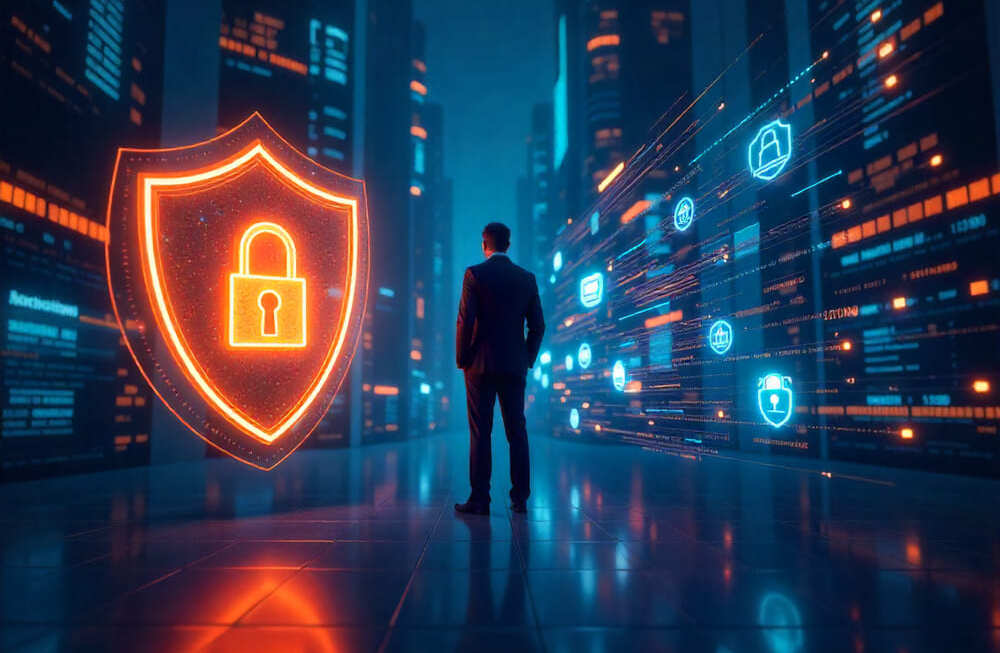
In light of the rapid technological development and increased reliance on the Internet, the risks of cyber extortion have increased dramatically, and in this context, the concept of information security and cybersecurity emerged to protect individuals and companies from increasing cyber threats, and to ensure the safety and security of their data and accounts.
In this blog, we will explore what information security and cybersecurity are, the difference between them, and how they can be applied to protect yourself from the dangers of the digital world.
Information security is the field that specializes in protecting information from any threats it may face, whether these threats come from individuals, malicious software, or human errors.
This includes protecting the confidentiality and integrity of information, as it is the protective shield that guards your personal and professional data from unauthorized access, alteration, or destruction.
Information security systems are divided into several main types, each with its own role in protecting information:
Software and application protection systems:
Antivirus software helps keep your device safe by finding and removing harmful viruses and malware.
Anti-spyware programs that identify and remove spyware collecting information about you without your consent.
Operating system protection systems:
Fixes for operating system weaknesses through routine updates.
Access control that manages who can access specific files and folders on your device.
Encryption of information that converts data into an un-readable form, only readable by someone with the correct decryption key.
Access control systems for applications:
Strong passwords that help secure your accounts from hacking.
Two-factor authentication, which adds an extra layer of security by requiring an additional verification code.
Permission management that defines the level of access each user has within the system.
Software and electronics protection systems:
Device scanning programs that check connected devices for any threats.
Data protection programs that safeguard data from corruption or damage.
Wireless network protection programs that protect your Wi-Fi network from intrusions.
Cyber security mainly focuses on keeping digital systems and networks safe from cyber attacks. This includes safeguarding devices, networks, and software from attacks aimed at unauthorized access, disruption, alteration, or destruction of these systems and data.
Protecting privacy: Prevents unauthorized access to your personal information.
Securing digital assets: Protects your company's data and digital assets from theft or damage.
Ensuring business continuity: Keeps your systems and services running without interruption.
Regulatory compliance: Helps businesses comply with security and legal regulations.
Computers: Includes desktop computers, laptops, and mobile devices.
Networks: Encompasses internet networks, local area networks (LANs), and wireless networks.
Cloud systems: Refers to data storage systems via the internet.
Databases: Save and organize data in a structured form.
Software applications: Includes all programs and apps you use.
Although information security and cybersecurity are sometimes used interchangeably, they are two completely different concepts.
Here's the difference:
Information Security
Focuses on protecting data and information in general, whether digital or physical (paper-based). It is concerned with the confidentiality, integrity, and availability of data, regardless of how it is stored or transmitted.
Main goals:
Prevent unauthorized access to information.
Protect information from alteration or destruction.
Ensure that information is available to authorized users.
Examples:
Establishing strong password policies
Encrypting sensitive data.
Performing regular data backups
Cybersecurity
Cyber security mainly focuses on keeping digital systems and networks safe from cyber attacks. It aims to safeguard hardware, software, and networks against digital threats such as viruses, malware, and cyber intrusions.
Main goals:
Preventing cyber intrusions.
Detecting and responding to attacks.
Restore systems after an attack.
Examples:
Firewalls.
Anti-virus programs.
Intrusion detection systems.
Despite the importance of information security and cybersecurity systems in protecting your digital operations, they are exposed to a wide and ever-evolving range of threats.
These threats present major challenges for individuals, businesses, and governments alike.
Among these threats are:
Malware, which includes:
Viruses: Self-replicating programs that spread and cause damage to files and software.
Worms: Spread rapidly through networks, consuming resources and disrupting systems.
Trojans: Disguised as useful programs but secretly carry out malicious activities.
Ransomware: Encrypts data and demands a ransom for decryption.
Cyberattacks, which include:
Denial-of-Service (DoS) attacks: Aim to disrupt online services by overwhelming them with traffic.
Distributed Denial-of-Service (DDoS) attacks: A more powerful form of DoS, using multiple devices to launch the attack.
Social engineering: Uses psychological tactics to trick users into revealing sensitive information.
Internal threats include:
Disloyal employees: Former or current staff may exploit their system knowledge to commit cybercrimes.
Human error: Simple mistakes like using weak passwords or opening suspicious email attachments can compromise systems.
Technological advances include:
Artificial intelligence (AI): AI can be leveraged to develop more sophisticated and targeted cyberattacks.
Internet of Things (IoT): The growing number of internet-connected devices expands the attack surface.
Geopolitical threats include:
State-sponsored attacks: Some nations support cyberattacks for espionage or sabotage purposes.
Cyberterrorism: Terrorist groups use cyberattacks to cause disruption and significant damage.
Several key measures to minimize and overcome these threats
Regularly updating software and systems
Using strong, secure passwords
Verifying sender identities before opening email attachments
Providing cybersecurity training for employees
Establishing and following incident response plans
Deploying advanced security solutions
Security Awareness Training: We offer specialized training programs to empower them to recognize common threats and take the right actions. We also help you build a strong security culture within your organization, where security becomes an integral part of daily routines.
Comprehensive Data and Systems Protection through: Identity and access management; we ensure that the right individuals receive appropriate access to data and systems, reducing the risk of breaches.
Cloud Security: We protect your data and applications in constantly evolving cloud environments.
Continuous Monitoring and Ongoing Improvement: Through regular assessments of your security systems, we identify vulnerabilities and suggest appropriate solutions. We help you comply with international regulatory standards, ensuring the protection of your customers' and partners' data. Finally, we develop comprehensive recovery plans for any cyber incident, minimizing downtime.
Integrated Technical Support: A team of specialized experts monitors your security systems 24/7 and responds immediately to any threats.
At AXS, we bring extensive expertise in cybersecurity, serving a diverse range of clients across various industries with tailored solutions that address their unique needs. Committed to excellence, we deliver the highest standards of quality in every service and strive to build lasting partnerships founded on trust and performance.
Keep your business safe and achieve success with confidence! With Axelerated Solutions, we offer more than just technical solutions; we offer a strategic partnership to support your security goals.